
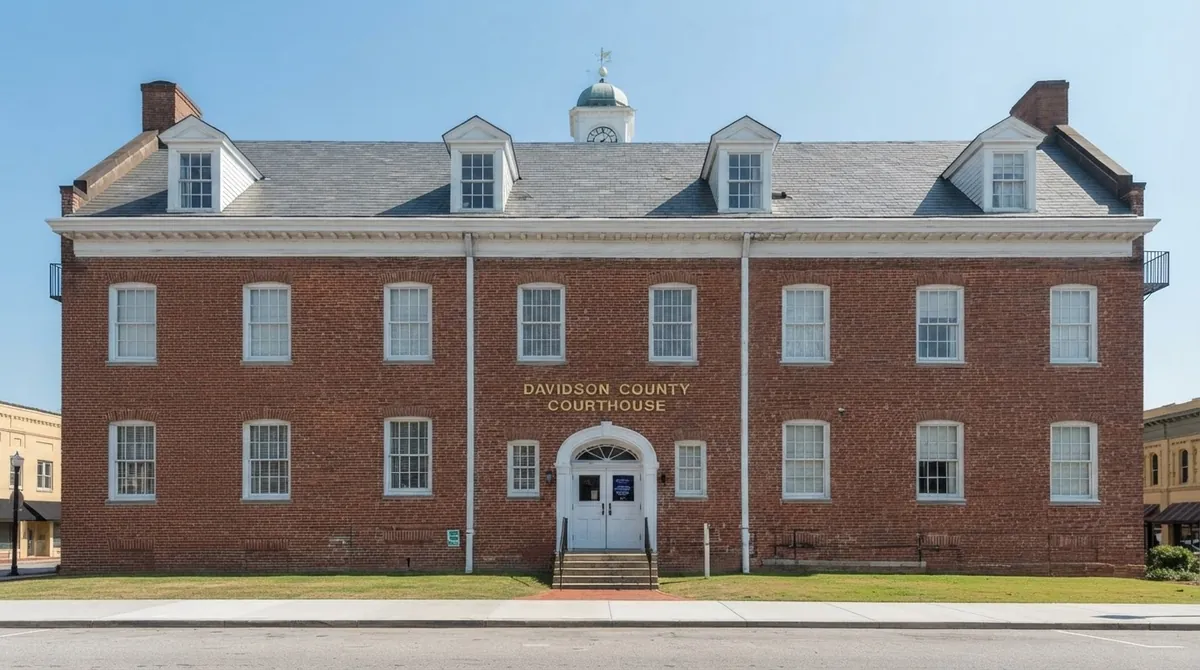
Sampson County court records in North Carolina are maintained by the Clerk of the District Court and are available through online tools, official court portals, and directly at the court clerk's office. SampsonCourt.us will help you find public information about court records in this county. Additionally, you can use the Sampson County page on the NC Judicial Branch portal, instructions for obtaining court records, or call the court clerk's office directly.
Sampson Court System Overview
Sampson County is part of the 4th Judicial District of North Carolina. This district exclusively serves Sampson County. The trial courts here are divided into District Court and Magistrate Division — magistrates handle minor cases, conduct preliminary hearings, and issue warrants, while district judges handle more complex criminal and civil proceedings. Superior Court handles serious criminal cases and civil claims with large demands.
Courts Serving Sampson
Residents of the county can turn to several judicial instances depending on the nature of the case.
| Court | Address / Contacts |
|---|---|
| Sampson County District Court | 101 E Main St, Clinton, NC 28328 |
| Sampson County Superior Court | 101 E Main St, Clinton, NC 28328 |
| Sampson County Magistrate Division | 101 E Main St, Clinton, NC 28328 |
| U.S. District Court — Eastern District of North Carolina | 310 New Bern Ave, Raleigh, NC 27601 |
| U.S. Bankruptcy Court — Eastern District of North Carolina | 300 Fayetteville St, Raleigh, NC 27601 |
Municipal courts within the county do not operate — North Carolina has a unified state court system.
What Types of Cases Sampson Courts Hear
The courts of Sampson County hear a wide range of cases. Here are the main categories:
- Felonies and misdemeanors
- Traffic violations and infractions
- Civil claims, including small claims
- Family law: divorce, custody, alimony
- Probate, guardianship, conservatorship
- Juvenile matters and child protection cases
- Adoption and termination of parental rights
Each category is discussed in more detail below.
District Court Cases in Sampson
The District Court in Sampson County hears misdemeanors, infractions, and civil claims with demands up to $25,000. It also handles all family law cases — divorce, custody, alimony — and juvenile proceedings. A district judge appointed to the district presides.
Criminal cases typically begin with the issuance of a warrant or summons by a magistrate, after which they are transferred to the District Court for substantive consideration. Civil cases are initiated by a complaint filed by the plaintiff through the clerk's office. A judge is automatically assigned according to the court's internal schedule.
Superior Court, on the other hand, hears felonies after a preliminary hearing and civil claims that exceed the jurisdiction of the District Court.
Magistrate Court Cases in Sampson
Magistrates in Sampson County are the first tier of the judicial system. They handle:
- Small claims with amounts up to $10,000
- Preliminary hearings in felony cases
- Issuance of arrest and search warrants
- Setting bail
- Traffic violations
- DWI cases at the first appearance stage
A magistrate does not conduct full trials with juries. If a party disagrees with a magistrate's decision in a civil case, they can appeal to the District Court for a new hearing. The jurisdictional limit for civil cases in the magistrate's court in North Carolina is $10,000.
Family Law, Probate, and Juvenile Matters in Sampson
Family Law. Cases involving divorce, custody, alimony, protective orders, and paternity are heard by the District Court. Divorce certificates can be obtained from the clerk's office in the county where the case was filed or through NC Vital Records.
Probate Matters. The Clerk of Superior Court acts as the probate judge. They handle applications for estate opening, appointment of executors and guardians, and conservatorship cases. Historical probate records of the county are available through the North Carolina State Archives.
Juvenile Matters. Cases under the Juvenile Code, including child protection and juvenile delinquency cases, are heard by the District Court. These records are confidential under state law. For information about the Guardian ad Litem program, contact through the county page on the NC Courts portal.
How Cases Move Through the Sampson Court System
- Case Initiation. Criminal proceedings begin with a complaint, warrant, or summons. Civil proceedings start with the filing of a complaint with the clerk's office.
- Judge Assignment. The case is assigned according to the court's internal schedule.
- First Hearing. In criminal cases — arraignment (announcement of charges and setting of bail). In civil cases — scheduling conference or preliminary meeting.
- Pre-trial Stage. Parties exchange evidence (discovery), file motions. In criminal cases, plea negotiations are possible.
- Substantive Hearing. A jury or judge delivers a verdict. A civil case may end with a settlement or default judgment.
- Post-Judgment. Sentencing, filing an appeal, or enforcing the judgment.
Appeals from the District Court are filed with the Superior Court, and from the Superior Court to the North Carolina Court of Appeals.
Court Administration, Local Rules, and Public Access in Sampson
The administrative district judge of the 4th Judicial District is responsible for organizing the work of the courts in Sampson County. The Trial Court Administrator coordinates daily operations — from scheduling hearings to managing staff.
Local district court rules and contact information can be found on the official Sampson County page on the NC Courts portal.
Public Records Access. Most court records in North Carolina are considered public under Chapter 132 General Statutes (Public Records Act). Exceptions include juvenile cases, adoption records, sealed materials, and records for which the court has issued a protective order. To request a public record, contact the clerk's office.
Attending Hearings. Court hearings are open to the public unless the judge decides otherwise. Some hearings may be held remotely — check this possibility by calling the court office at (910) 592-5131.
Court Records and Related Court Resources in Sampson
- Case Search. The NC Judicial Branch portal allows you to search cases by defendant name, case number, or citation number. There are also public terminals in the courthouse for self-search.
- Hearing Calendar. The hearing schedule is available on the Sampson County page of the NC Courts portal.
- Forms and Self-Help Resources. Court forms for filing complaints, motions, and responses are available on the NC Judicial Branch website in the forms section.
- Court Clerk's Office. To obtain copies of court records, visit in person or send a written request. Certified copies usually require a fee.
- Offender Search. The NC Department of Adult Correction provides information on individuals in state prisons, on parole, or under supervision.
- Sex Offender Registry. The registry is available on the NC State Bureau of Investigation website.
- Vital Records. Birth, marriage, divorce, and death certificates can be obtained through NC Vital Records or the local Register of Deeds office.
- Criminal Background Check. Instructions for obtaining a criminal background check and expunction procedures are described on the NC Courts portal.